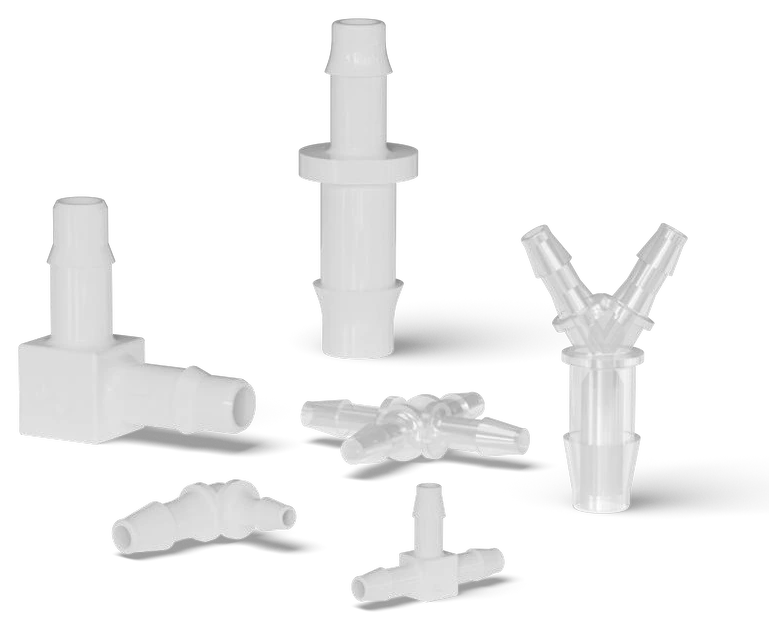
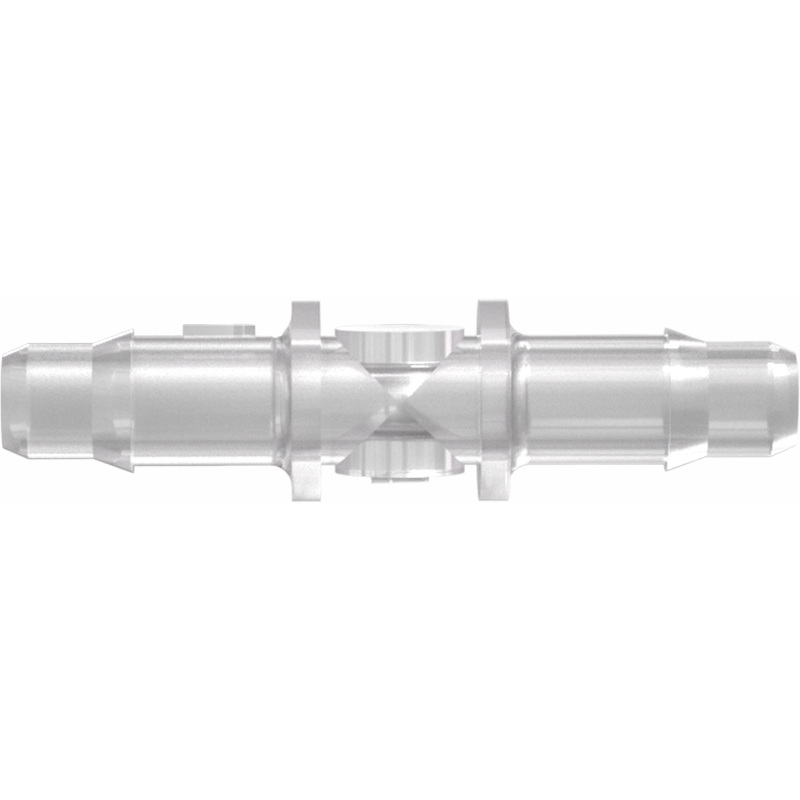
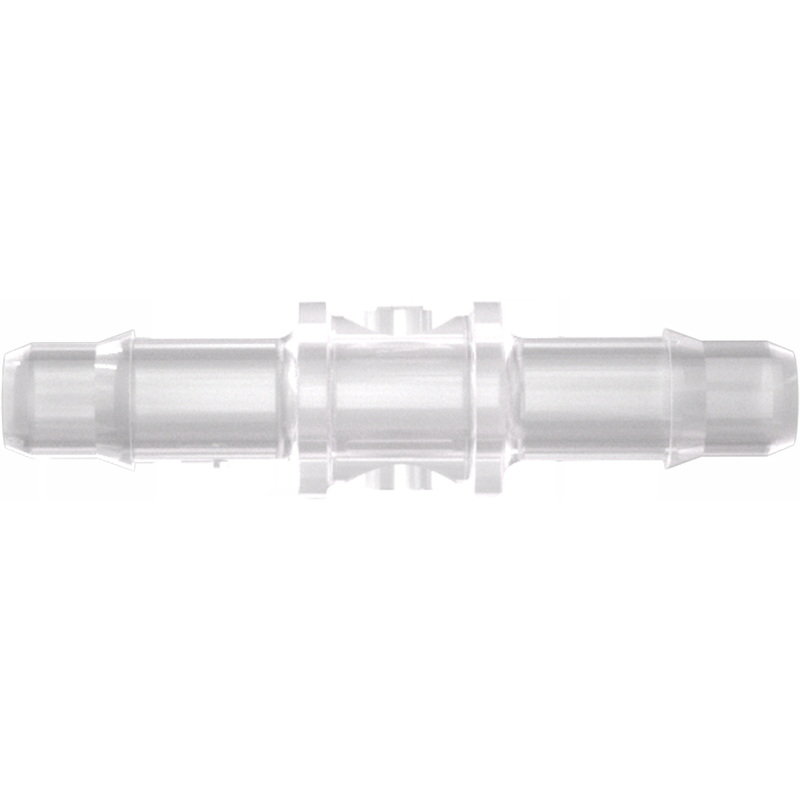
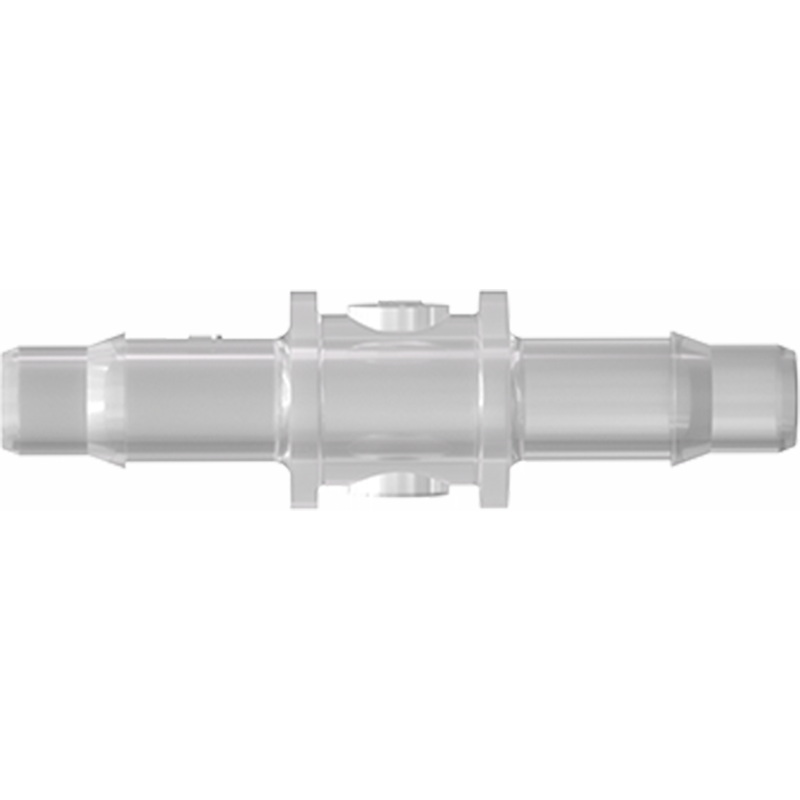
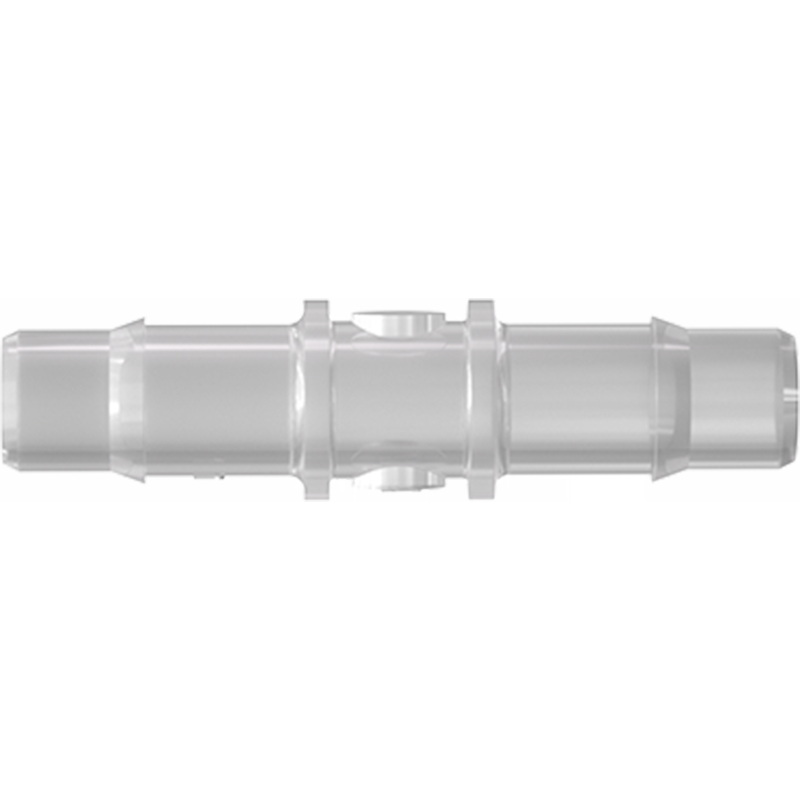
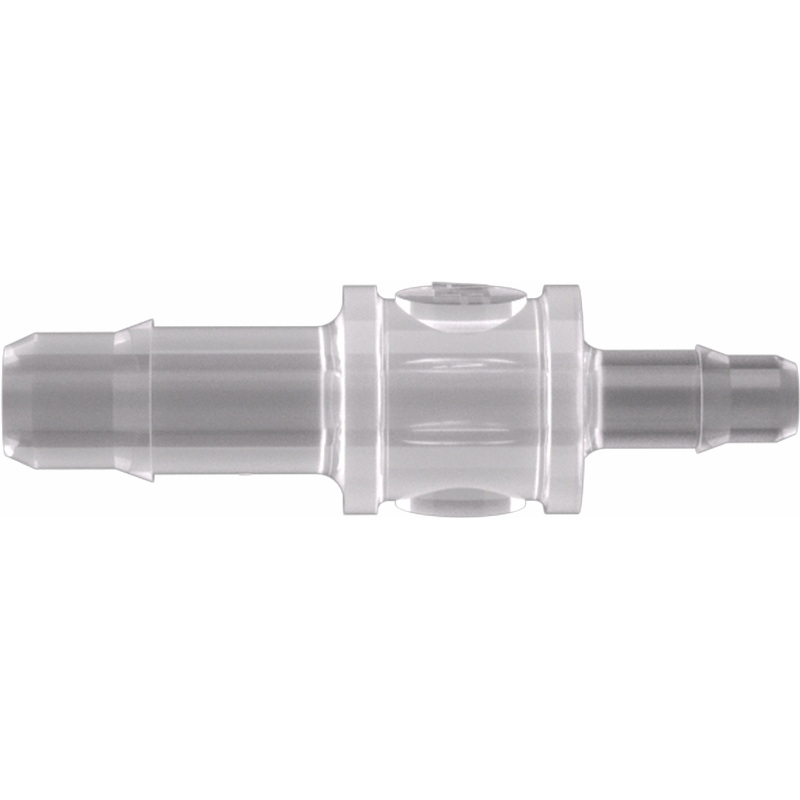
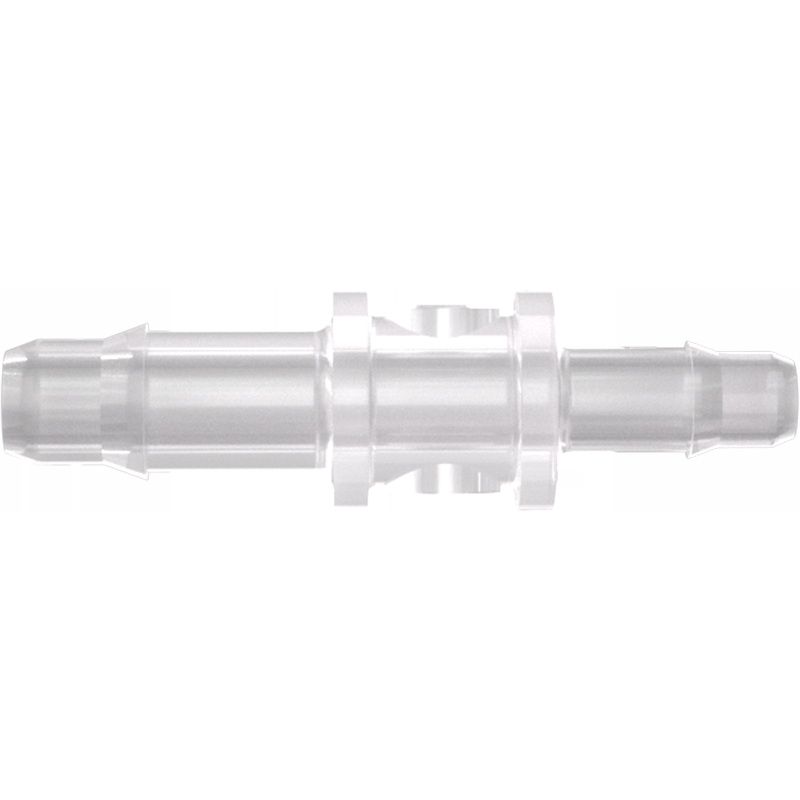
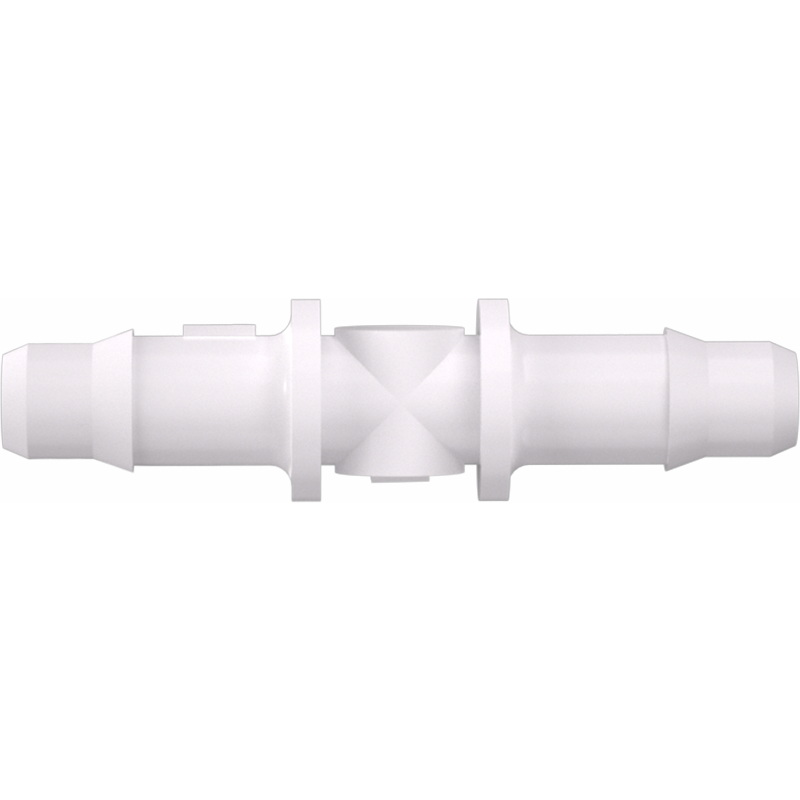
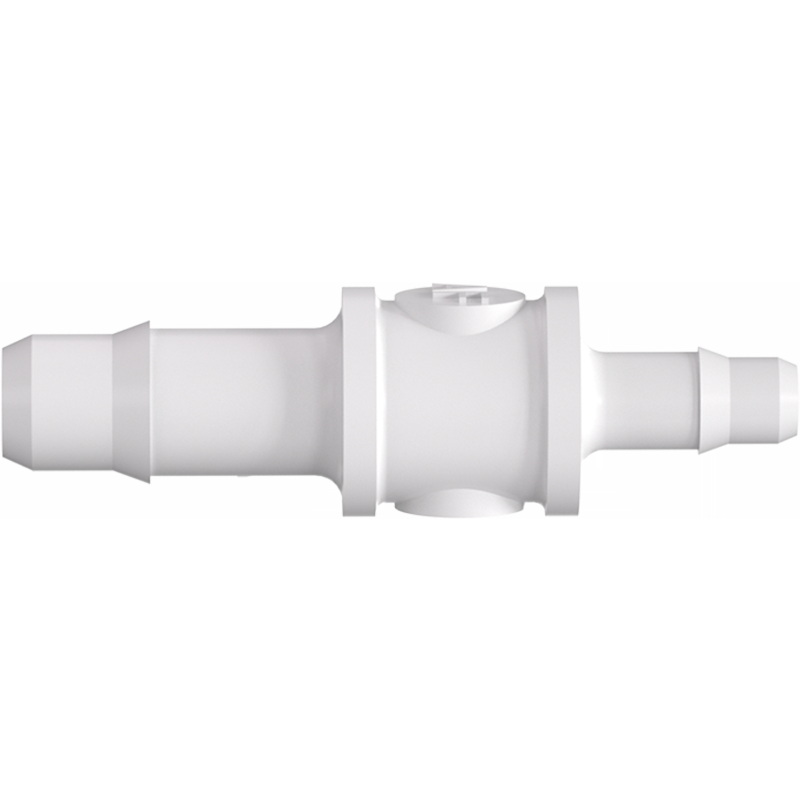
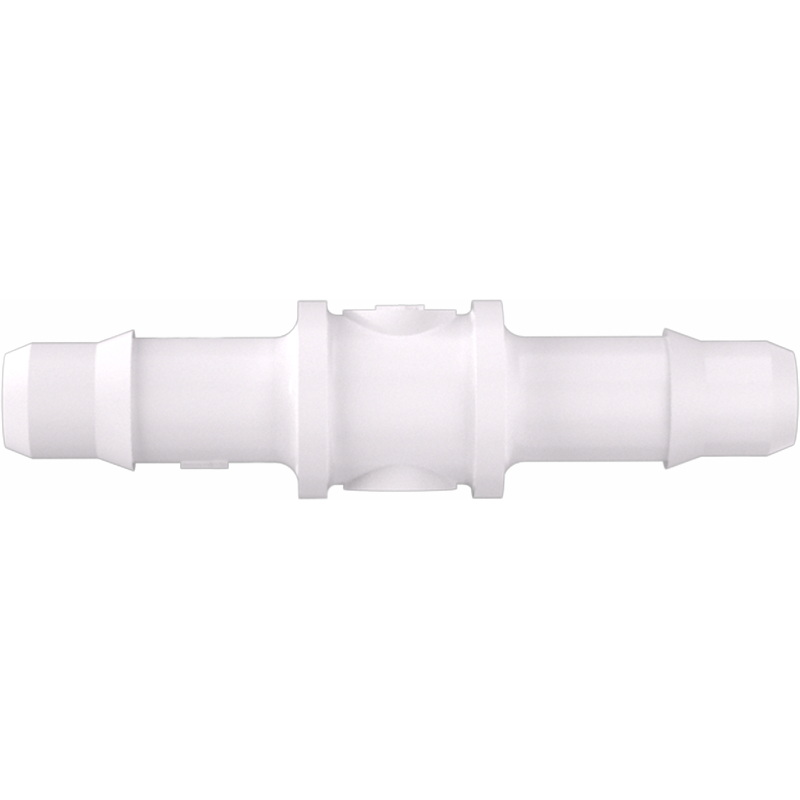
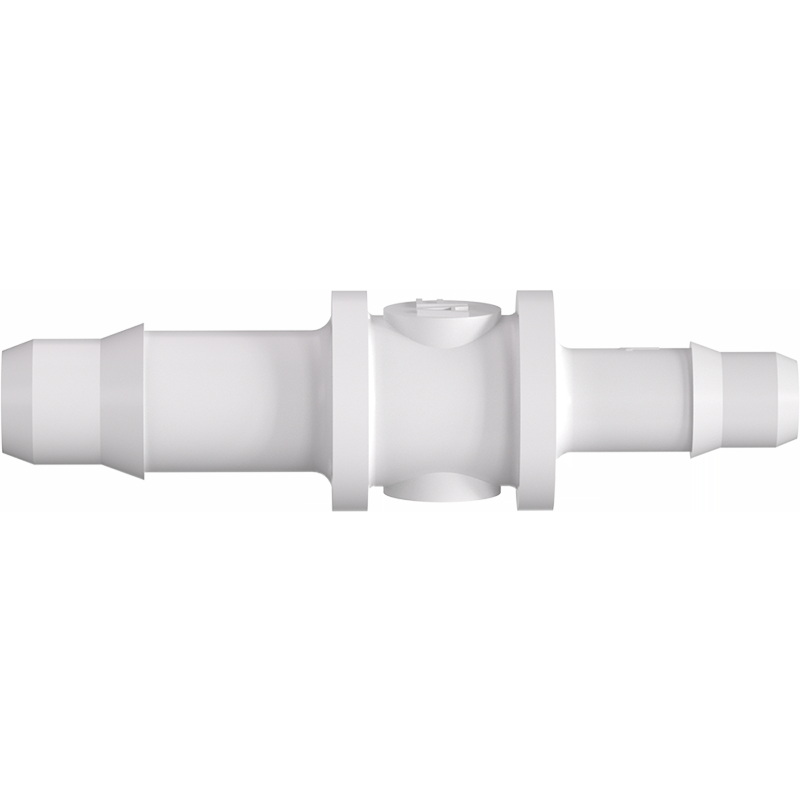
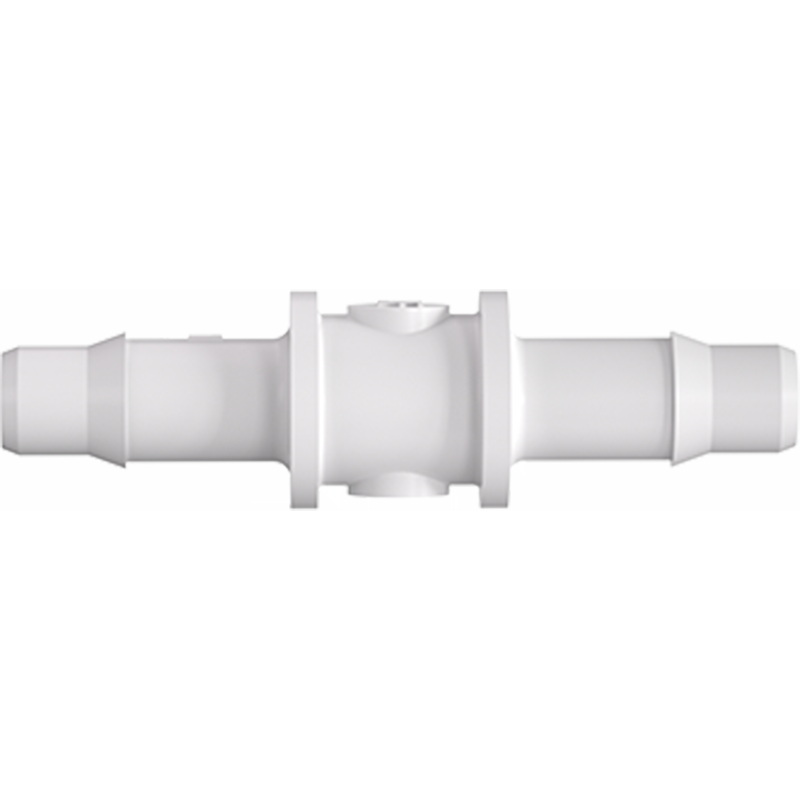
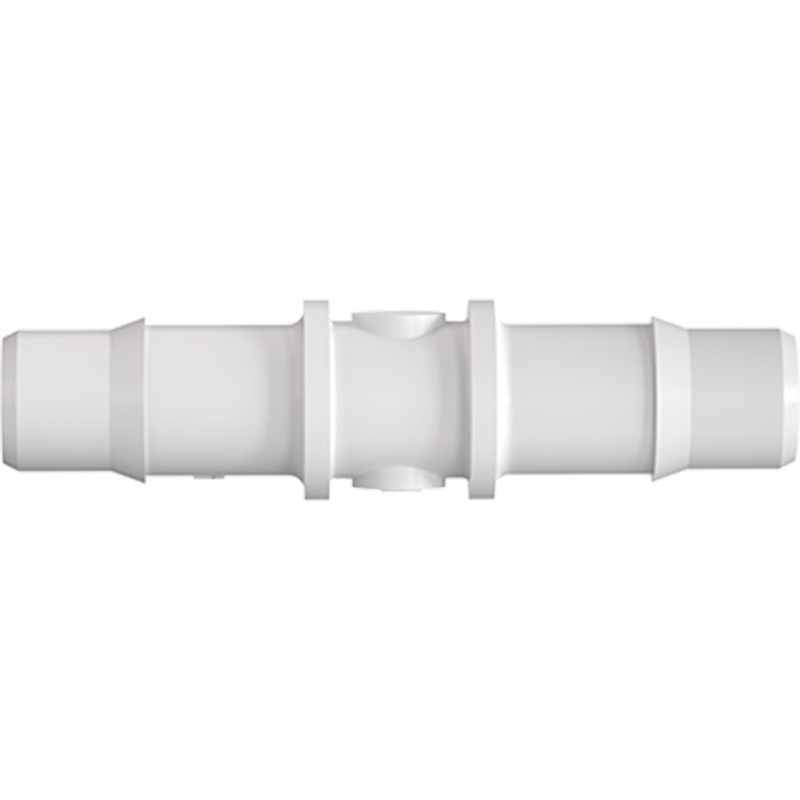
FOREACH miniature barbed fittings, also called hose barb fittings, connect flexible tubing in IVD, life science, laboratory automation and analytical instruments. They serve reagent delivery, washing, circulation, liquid supply and drainage lines. Straight connectors, elbows, tees and plugs support tubing extensions, transitions between tubing sizes, changes of direction in confined spaces and multiple branches. They can connect two or more compatible silicone, TPU, TPE, PU or PVC tubes and route them to suit the equipment layout.
The range includes BA straight connectors, BL elbows, BT tees, BY wye connectors and BBL plugs. Straight, elbow and branch fittings have corresponding equal-size and reducing versions. Equal-size straight connectors join tubes with the same ID, reducers join different IDs, elbows change direction, tees and wyes split or merge flow, and plugs close tube ends. Select the barb by tubing ID: common sizes are 1.6, 2.4, 3.2, 4.0, 4.8 and 6.4 mm, with 7.9, 9.5 and 12.7 mm available on some models. Letters such as C, D, F, V and X following the size code identify different barb designs. Bodies are available in materials such as PP and PA, with model-specific colors. Each connection on a multiport or reducing fitting must match its respective tube.
The barb seals against the inner wall of the tubing and helps retain it. Tubing ID tolerance, wall thickness, hardness and barb design jointly determine insertion force, sealing performance and resistance to pull-off. Assess the pressure capability of the assembled connection using the selected tubing, fitting and retention method, and account for pressure fluctuations, vibration and external tensile loads. During assembly, keep tube ends square and barb surfaces undamaged, and allow sufficient insertion depth and bending clearance. Route tubing to reduce side loads on the fitting, and add supports where tubing is exposed to tension or vibration. Select fitting and tubing materials for the process fluid, cleaning fluid, temperature and contact time; schedule tubing inspection and replacement according to operating conditions and maintenance intervals.