Foreach TechnologyForeach Technology
Home
Products
Applications
About Us
Contact & Partnership
简体中文EnglishEspañolFrançais한국어Русский
Home
Products
Pump SeriesValve SeriesTubing SeriesFitting SeriesProbe SeriesSmart Control SeriesTubing Assemblies
Applications
All applicationsIVD DiagnosticsLife SciencesLaboratory AutomationAnalytical InstrumentsEnvironmental MonitoringSynthetic Biology
Resources
DatasheetsFluid Resistance CalculatorFitting ReplacementInstallation GuidesMaterial CompatibilityTechnical ArticlesCompany News
About Us
About ForeachR&D and ManufacturingQuality System and QualificationsMilestonesForeach Culture
Contact & Partnership
Contact UsBecome a Distributor
  • Pump Series
  • Valve Series
  • Probe Series
  • Fitting Series
  • Tubing Series
  • Control Series
  • Tubing Assemblies
  • All applications
  • IVD
  • Life Science
  • Lab Automation
  • Analytical Instruments
  • Environmental Monitoring
  • Synthetic Biology
  • Datasheets
  • Fluid Resistance Calculator
  • Fitting Replacement
  • Installation Guides
  • Material Compatibility
  • Technical Articles
  • Company News
  • About Foreach
  • R&D & Manufacturing
  • Quality & Compliance
  • History
  • Foreach Culture
  • Inquiry Form
  • Contact Information

Shenzhen Foreach Technology Co., Ltd.

Address: 13th Floor, 2nd Building, Yufengda Industrial Park, 1008th Guang Qiao Boulevard, Guangming District, Shenzhen 518132 CHINAView Map

Email: [email protected]

Tel: +86 755 8655 3831

LinkedInYouTubeFacebookInstagramX

© 2026 Shenzhen Foreach Technology Co., Ltd. All rights reserved.

Privacy Policy·

Home/Applications/In Vitro Diagnostics/Molecular diagnostics
< Back

Molecular diagnostics: isolating reagent, nucleic-acid eluate and waste paths

Application guide

Reagent, nucleic-acid eluate and waste-path isolation is a specific liquid-handling operation in molecular diagnostics. This page explains product responsibilities, sequence, actual conditions and recovery requirements. Establish the architecture before comparing configurations.

Applicable architecture

The workflow uses a diagnostic workstation with nucleic-acid extraction as an example. Magnetic-bead extraction can use pipetting or magnetic rods that transfer beads; binding, washing and elution do not all require pump-driven fixed fluidics. Distinguish liquid-moving actions, solid-phase transfer and downstream setup before discussing components.[2]

Application guide

Molecular diagnostics

Molecular diagnostics
Diaphragm pumps in molecular diagnostics
Bubble and pressure sensing in molecular diagnostics
Tubing and fittings in molecular diagnostics
Multiport rotary valves in molecular diagnostics
Isolation of reagent, nucleic-acid eluate and waste paths
Air-displacement pipetting pumps in molecular diagnostics
Tip-based washing and nucleic-acid eluate transfer
Syringe pumps in molecular diagnostics
Lysis and binding reagent dispensing through fixed fluidics

On this page

Where reagent, nucleic-acid eluate and waste-path isolation occurs in the instrumentProduct responsibilities in this operationOrganize the sequence by actual architectureDefine operating conditions for this taskCompare product configurations by the roles on this pageValidate operation results at the receiverLocate abnormalities and restore the next operationReferencesRelated guides

01Where reagent, nucleic-acid eluate and waste-path isolation occurs in the instrument

Arrange paths and consumables according to reagent preparation, sample processing and pre-/post-amplification contamination-control requirements, keeping post-amplification areas isolated from pre-amplification operations. Define flushing and cleaning validation for shared segments, and manage nucleic-acid eluate reception separately from paths for samples with higher contamination levels.

Cleaning fluid and waste must not enter nucleic-acid eluate paths through valve states or backflow. Include maintenance bypasses and power-off states in diagrams and check shared residue.

02Product responsibilities in this operation

Valves control the current source or destination; the associated drive performs metering or transfer. Port connections, actual positioning and shared-segment renewal must match the operation.

For this operation, confirm: Reagent, eluate, cleaning and waste connections; sample and receiver identity; pre-/post-amplification boundaries; shared volume; maintenance and power-off states.

03Organize the sequence by actual architecture

  1. Create a state table for fixed-path reagent sources, nucleic-acid eluate receivers, maintenance and waste, confirming contact boundaries between contamination zones.
  2. Switch sources and outlets for the current extraction or setup step, checking actual valve position, shared residue and target-liquid arrival.
  3. Before eluate reception or downstream setup, confirm that cleaning-fluid and waste paths are isolated as designed. During recovery, first verify sample identity, destination and volume already transferred.

04Define operating conditions for this task

Conditions, results and abnormality records for this operation
To defineDetails
Actual operating conditionsReagent, eluate, cleaning and waste connections; sample and receiver identity; pre-/post-amplification boundaries; shared volume; maintenance and power-off states
Acceptance targetVerify the intended connections during extraction, eluate reception, cleaning, maintenance and power-off states. Check leakage, backflow and shared-segment renewal without connecting waste or cleaning liquid to an eluate receiver.
Fault localizationWrong connections, backflow or retained liquid can mix sample identities or introduce wash fluid and waste into an eluate path. A mechanically completed switch does not resolve the contamination status of affected material.

Further technical reading

  • Rotary Valve Selection Guide: From Fluid Paths to System Validation
  • Choosing Rotary Valve Wetted Materials: Head, Rotor and Seals

05Compare product configurations by the roles on this page

Configuration options for the product roles on this page
ProductConfiguration optionConditions to verify
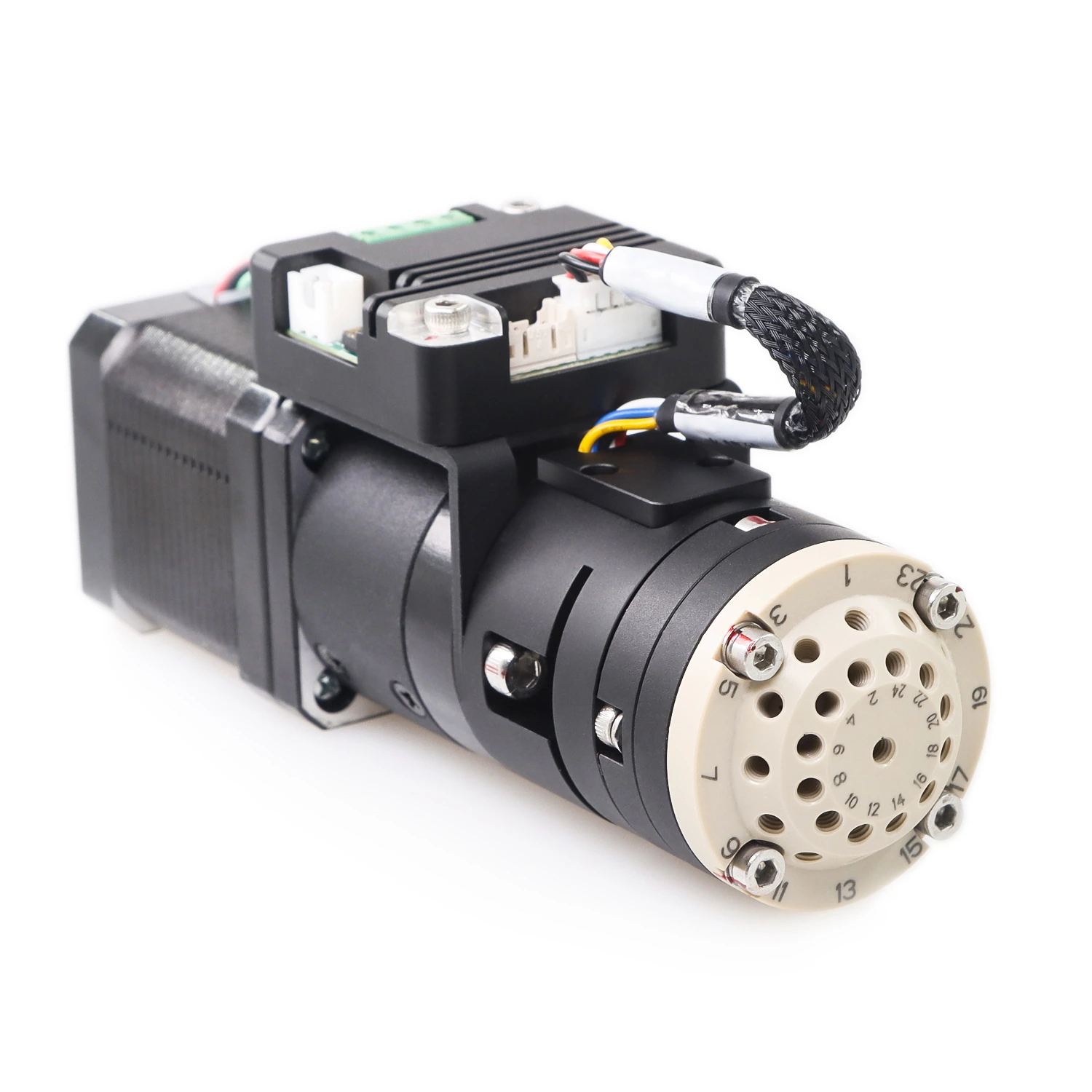
MRV3 multiport rotary valveMultiple-source selectionCompare 10-, 16- and 24-port options and port diagrams; verify high-pressure suitability separately
  • MRV3 multiport rotary valve

    MRV3 multiport rotary valve

    View Details

06Validate operation results at the receiver

Verify the intended connections during extraction, eluate reception, cleaning, maintenance and power-off states. Check leakage, backflow and shared-segment renewal without connecting waste or cleaning liquid to an eluate receiver.

Confirm eluate identity and received volume, then assess negative blanks and downstream usability under the actual method. Keep these results separate from valve-position and pressure records.

07Locate abnormalities and restore the next operation

Wrong connections, backflow or retained liquid can mix sample identities or introduce wash fluid and waste into an eluate path. A mechanically completed switch does not resolve the contamination status of affected material.

Isolate the affected routes and establish source, destination and volume already transferred. Review exposed samples and contamination boundaries before cleaning or replacing affected parts; verify renewal and method-required blanks before restarting.

Neither valve closure nor low internal volume proves isolation of nucleic-acid eluate or pre-amplification work. The complete path and handling procedure require validation.

References

View references (2)
  1. [1]FOREACH MRV3 multiport rotary valve: configurations and specifications
  2. [2]Thermo Fisher KingFisher: binding, washing and elution by transferring magnetic beads

Related guides

  • Back to the molecular-diagnostic fluidics overview
  • Multiport rotary valves in molecular diagnostics

Related Products

MRV3 Rotary valves

MRV3 Rotary valves

Related Technical Articles

Rotary Valve Selection Guide: From Fluid Paths to System Validation

Map the connections required at each step before comparing specifications. Use the actual liquids, tubing and switching sequence to validate suitability for your instrument.

2026-09-30View Details

Choosing Rotary Valve Wetted Materials: Head, Rotor and Seals

Identify every component in contact with liquid before comparing PEEK, PCTFE and other candidates. Evaluate chemical compatibility, dynamic sealing and analytical results together.

2026-09-30View Details

Discuss Your IVD Fluidic Requirements

Share the instrument type, sample and reagent properties, working volumes, cycle timing, fluid path and acceptance criteria so we can discuss suitable components and prototype evaluation.

Discuss your application