
What do these products do in this instrument?
Bubble and pressure sensing: preserve sample status associated with abnormalities
Provide observations for an actual liquid-supply, transfer or waste branch. Fixed-tubing sensors do not observe every disposable-tip transfer or magnetic-rod movement. The controller must combine the relevant branch signal with the workstation records before identifying which samples or eluates require review.
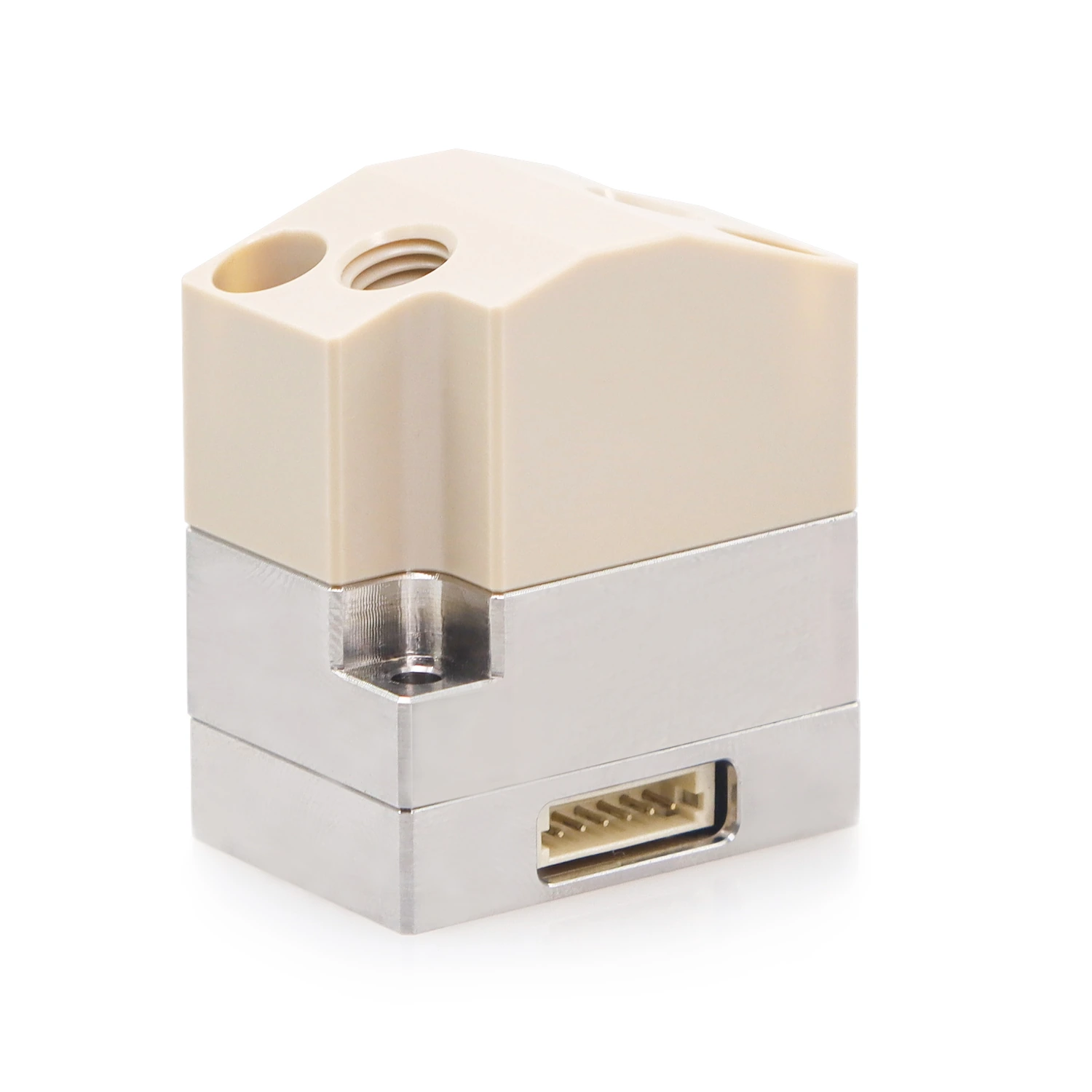
ABD provides bubble or liquid-state signals for defined tubing; PDM5 provides pressure information at a defined location. Configure module, position and action window separately; the controller associates affected samples or tasks.
Choose monitoring around the liquid operation that exists
Map fixed reagent feeds, sample-contact paths and waste branches separately from bead transfer and tip handling. Where a branch may contain beads or precipitated material, establish its normal operating state and permitted handling with the actual formulation. A detector position suitable for one supply tube cannot be assumed to cover a downstream well or another handling architecture.
Further technical reading
Recover by sample stage and retained material
The record must distinguish reagent added, wash supernatant removed and eluate collected. After a disturbance, establish the destination and the amount known to have moved; leave uncertain amounts explicit. The method then determines whether to complete a transfer, stop the sample or repeat preparation, avoiding a second reagent addition or loss of eluate to a waste route.
Translate actual branch conditions into configuration requirements
| Condition | To confirm |
|---|---|
| Architecture and branch | Identify the fixed liquid path that the module can observe, with tube dimensions, formulation and any permitted particles or gas segments. |
| Material and destination | Associate sample identity and well position with lysis/binding addition, washing, elution or downstream setup. |
| Fault response | Define how the workstation preserves transferred and uncertain material, separates eluate from waste, and releases a sample after method-specific checks. |
| Operation | Specific operating conditions |
|---|---|
| Fluidic monitoring | Actual liquid-transfer architecture, formulation and particle conditions, sample/well identity, retained fraction, destination and the extraction or setup stage |
Fluidic monitoring
During reagent delivery, associate the supply event with the wells being filled and any shared distribution segment. Confirm the destination records before retrying a partially completed batch.
During wash removal, observe the actual aspiration or waste branch while tracking the solid phase retained in the vessel. Do not treat successful waste removal as proof of adequate extraction washing.
During elution or setup, retain product identity when a transfer stops. Verify the receiving position and recoverable amount before moving liquid again or opening a maintenance route.
Test recovery using the method-required blanks and product checks. Persistent contamination or poor recovery after a normal fluidic trace calls for investigation beyond the monitored branch.
Compare product configurations by the roles on this page
| Product | Configuration option | Conditions to verify |
|---|---|---|
| ABD bubble-detection module | Bubble or liquid-state identification in defined tubing | Validate detection and false alarms for tubing material, dimensions, medium and action window |
| PDM5 pressure-detection module | Pressure-state monitoring at a defined fluidic location | Confirm range and wetted configuration by model; validate normal baseline and abnormalities separately |

Related operations and architecture comparisons
Lysis and binding reagent dispensing through fixed fluidics
Confirm materials and action conditions separately for lysis and binding solutions. Record sample identity, target well and completed delivery steps; one water sequence cannot cover all working liquids.
Tip-based washing and nucleic-acid eluate transfer
Aspiration speed, solid-phase position and residue affect the next step. Washing removes supernatant while elution recovers nucleic-acid eluate, requiring different heights and destinations; validate with recovery and blanks.
Confirm product roles in actual operation
| Operation | Measurements and observations | Priority checks |
|---|---|---|
| Fluidic monitoring | Challenge reagent depletion and representative restrictions or waste disturbances in the branches actually monitored. Check event-to-well association and handling of partially completed transfers, then assess recovery and blanks with the downstream method. | A normal supply signal cannot establish successful lysis, bead retention or eluate suitability. If preparation fails, investigate the physical transfer and the extraction or assay result separately. |
Verify branch detection and controller bookkeeping with the actual workflow, then confirm recovered product and between-sample contamination through the method. Sensor status alone is not nucleic-acid quality or PCR acceptance.
Can the workstation repeat a transfer after clearing an extraction alarm?
First determine which material has already reached which well or receiver. Repeating a lysis addition, wash removal or eluate transfer has different consequences; the continuation rule must use the sample stage and the actual retained material.
Valve switching or low dead volume alone does not prove contamination isolation for extracted nucleic acid and amplification setup.