
What do these products do in this instrument?
Multiport rotary valves: selection of assay-required reagent sources
Connect the method-required reagent source to its metering path and define the destination during priming or changeover. Keep source identity, shared-segment renewal and actual arrival tied to the addition sequence of the selected assay.
MRV3 selects sources or destinations and requires a port-state diagram and shared-volume budget. Port count indicates routing options; confirm pressure in each state and independent simultaneous supply requirements separately.
Select routing that fits the method addition sequence
List reagent sources in their required order, with metering, preincubation and reading stages where applicable. Determine whether selection and renewal can finish before each addition is needed. A dedicated route may be appropriate when a shared path imposes an unacceptable changeover step; the decision depends on the assay and instrument schedule, not a universal valve switching time.
Further technical reading
Distinguish position feedback from reagent contact
After the valve reaches its position, old liquid may remain between the selected source and probe. Verify the intended reagent at the receiver after the actual renewal sequence, and observe arrival relative to the method event. Include a wash-to-reagent transition and the first addition after service because restored routing does not alone establish the intended reaction composition.
Translate actual branch conditions into configuration requirements
| Condition | To confirm |
|---|---|
| Reagent order | Provide the selected assay, source identity and required addition order, including the permitted time for path renewal before each dose. |
| Receiver and shared path | Map the metering branch, probe and reaction destination, along with the separate discharge route for priming or old liquid. |
| Interrupted sequence | Define permitted valve states and pressure after a stop, preserving the cuvette and addition history before the controller resumes. |
| Operation | Specific operating conditions |
|---|---|
| Switching reagent sources and reaction paths | Assay reagent order, source and discharge paths, shared volume, actual arrival observation, valve-state pressures and reaction history after interruption |
Compare product configurations by the roles on this page
| Product | Configuration option | Conditions to verify |
|---|---|---|
| MRV3 multiport rotary valve | Multiple-source selection | Compare 10-, 16- and 24-port options and port diagrams; verify high-pressure suitability separately |
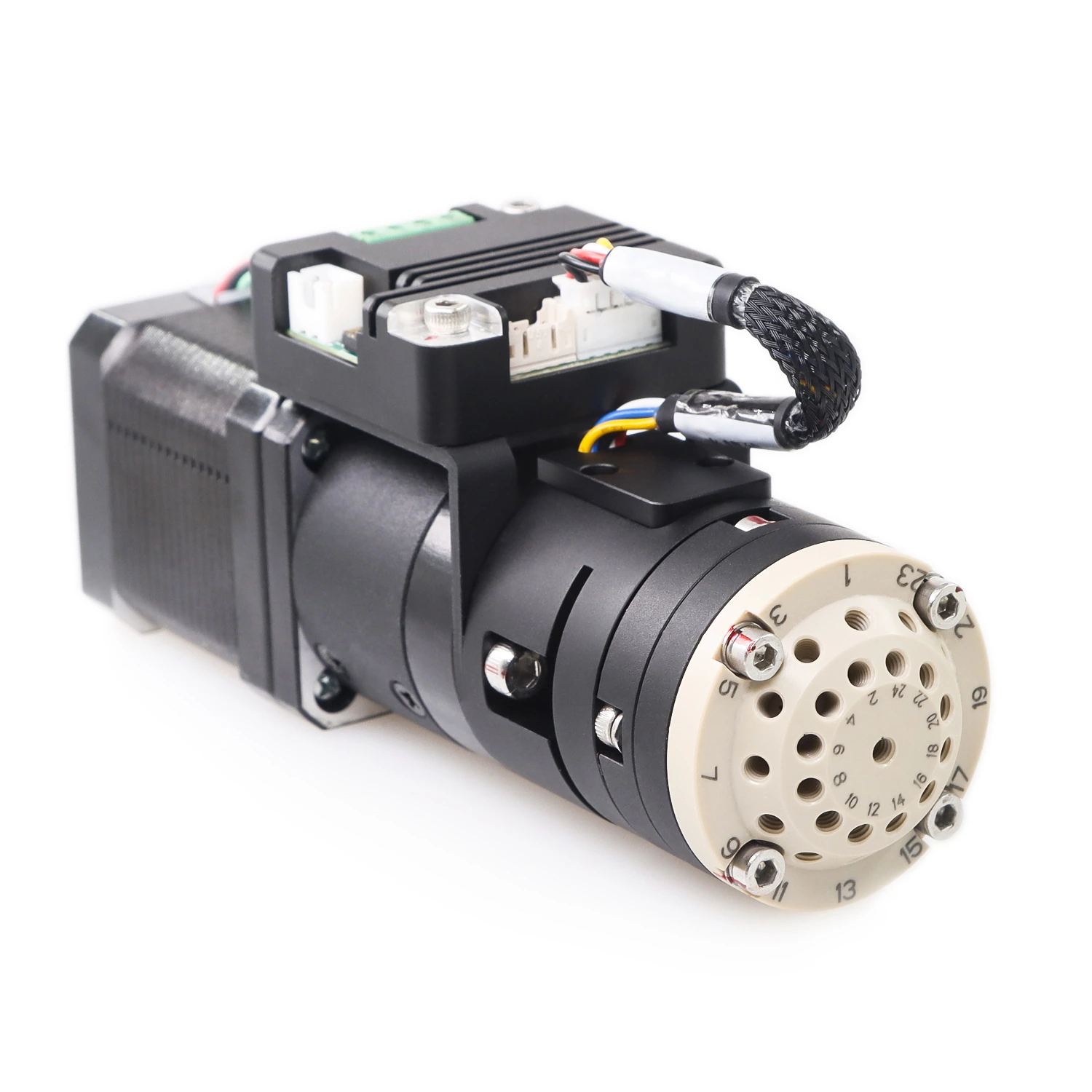
Explore specific operating and validation tasks
Switching reagent sources and reaction paths
Valve-position confirmation and actual liquid arrival are different events. Coordinate metering and detection by each state's source, destination and shared volume, checking unintended connections and residue.
Confirm product roles in actual operation
| Operation | Measurements and observations | Priority checks |
|---|---|---|
| Switching reagent sources and reaction paths | Verify connection state, reagent identity and actual arrival through the complete metering path. Include source changes, wash recovery and the first valid addition after service under the method sequence. | Position feedback may precede fresh-reagent arrival; retained liquid or leakage can alter the addition. Review composition and timing before adjusting reaction-start commands. |
Select the routing from the available method window and accepted renewal sequence. Preserve the distinction between valve response, liquid arrival and the assay-defined start or reading event.
Does a faster valve switch guarantee an earlier valid reaction start?
The reaction depends on actual liquid contact and the method sequence. A faster position change may leave the same shared liquid to renew; confirm the reagent reaching the cuvette and its arrival before changing the assay timing.
Pump or valve response time is not the reagent-contact or instrument measurement-start time.