
Where reagent-source and reaction-path switching occurs in the instrument
Define each reagent's path, temperature and operating sequence according to the current method. For shared flow paths, validate media compatibility, flushing and residue. After switching, check waiting time and the first dose after recovery before starting the next reaction according to the method.
Valve-position confirmation and actual liquid arrival are different events. Coordinate metering and detection by each state's source, destination and shared volume, checking unintended connections and residue.
Product responsibilities in this operation
Valves control the current source or destination; the associated drive performs metering or transfer. Port connections, actual positioning and shared-segment renewal must match the operation.
For this operation, confirm: Assay-specific reagent sources and order; shared and isolated paths; switching pressure; flushing volume; first-dose arrival and the subsequent reaction window.
Organize the sequence by actual architecture
- List reagent sources, reaction paths and maintenance destinations for the current method, distinguishing shared segments from components that require isolation.
- Switch valve positions within permitted pressure and timing conditions, flush shared segments and confirm arrival of the required reagent.
- Include switching and flushing time in subsequent delivery scheduling, checking residue, unintended connections and arrival-delay effects on the reaction sequence.
Define operating conditions for this task
| To define | Details |
|---|---|
| Actual operating conditions | Assay-specific reagent sources and order; shared and isolated paths; switching pressure; flushing volume; first-dose arrival and the subsequent reaction window |
| Acceptance target | Measure replacement volume and reagent-arrival delay for each intended path change. Check the first dose at the reaction cuvette for volume and residue before relating it to the method-defined initiation and reading sequence. |
| Fault localization | A delayed first dose or residual liquid can shift reagent contact or composition even when the valve changes state on time. Treat port-position faults and reaction-timing faults separately. |
Further technical reading
Compare product configurations by the roles on this page
| Product | Configuration option | Conditions to verify |
|---|---|---|
| MRV3 multiport rotary valve | Multiple-source selection | Compare 10-, 16- and 24-port options and port diagrams; verify high-pressure suitability separately |
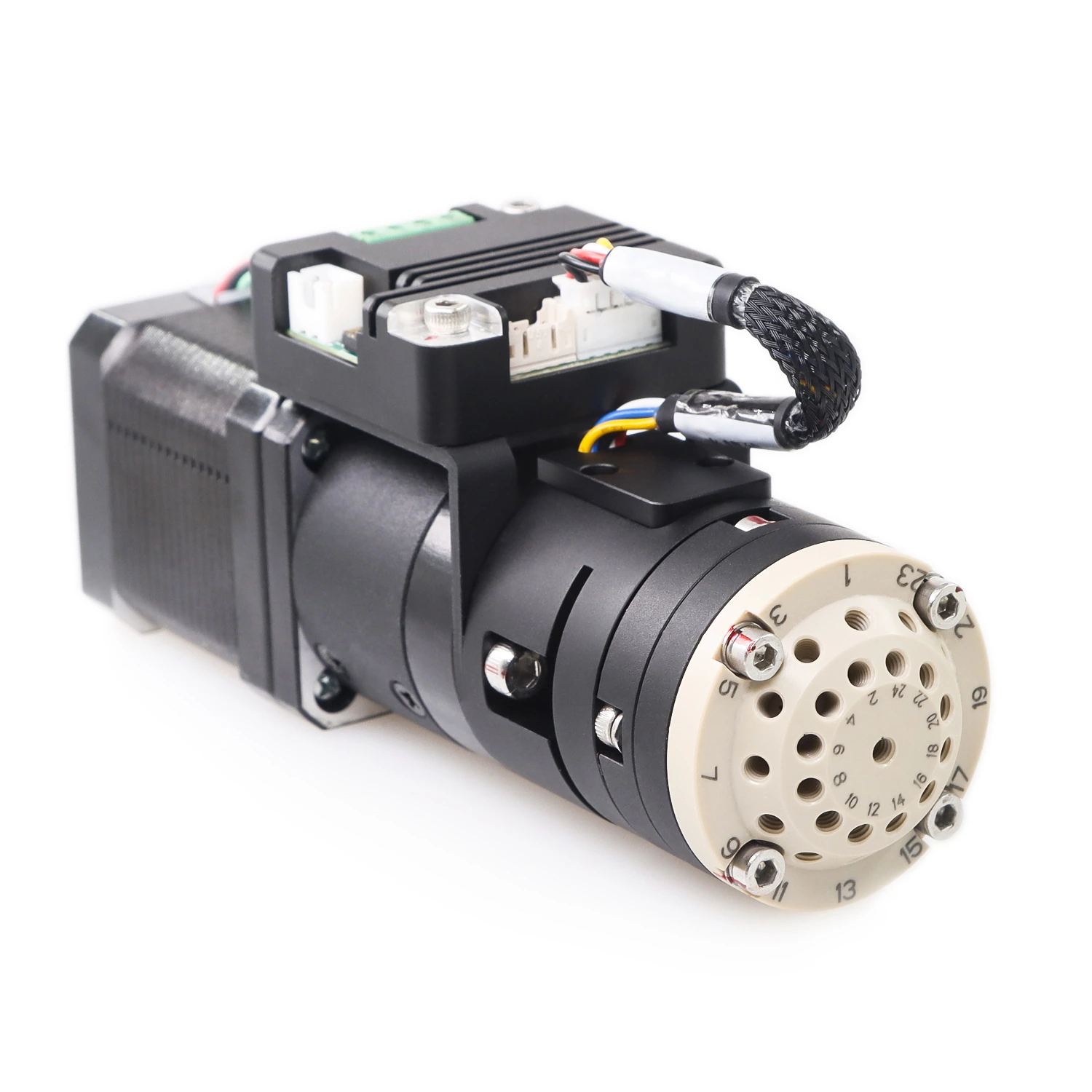
Validate operation results at the receiver
Measure replacement volume and reagent-arrival delay for each intended path change. Check the first dose at the reaction cuvette for volume and residue before relating it to the method-defined initiation and reading sequence.
Repeat these checks after standby or a change to tubing, probes or switching speed. Evaluate the complete method result with the actual reagent order, mixing and temperature conditions.
Locate abnormalities and restore the next operation
A delayed first dose or residual liquid can shift reagent contact or composition even when the valve changes state on time. Treat port-position faults and reaction-timing faults separately.
Hold the affected reaction sequence, establish what reached the cuvette and when, and handle that cuvette according to the method. Restore the source and shared path, then recheck arrival and first-dose volume before starting another reaction.
Valve response time is not reagent-contact time. Clotting, chromogenic and immunoturbidimetric methods require their own initiation and reading rules.