
What do these products do in this instrument?
Multiport rotary valves: sample processing and channel-path selection
Route the required reagent, prepared sample or wash source to its intended branch where selection is needed. Bind each valve state to the corresponding preparation or detection stage so the receiving channel and the liquid in the shared segment remain known.
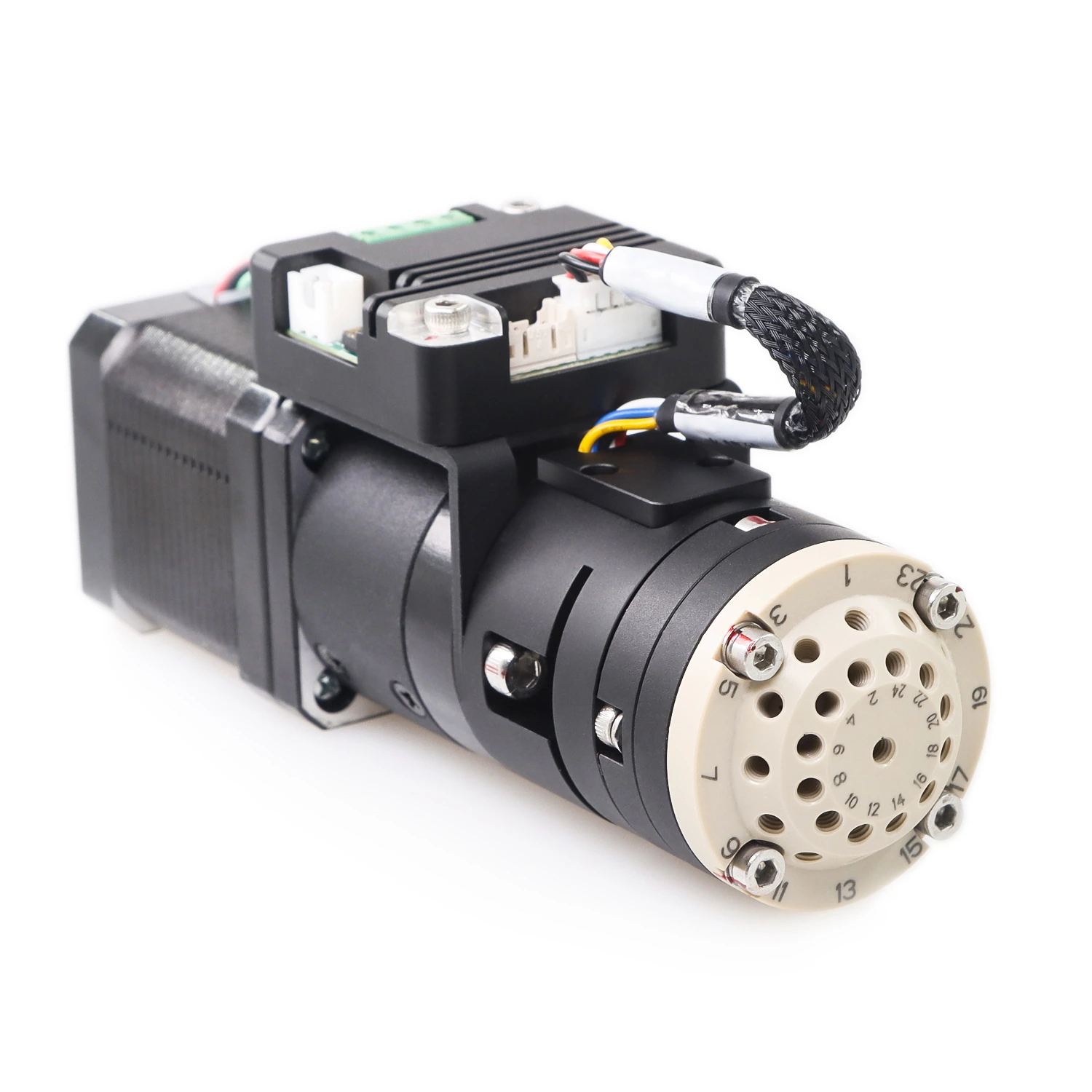
MRV3 selects sources or destinations and requires a port-state diagram and shared-volume budget. Port count indicates routing options; confirm pressure in each state and independent simultaneous supply requirements separately.
Build the connection map from the detection architecture
Identify which paths perform metered dilution, reagent treatment and detection supply. Include sheath flow only where the chosen channel requires it. The valve arrangement must accommodate the relevant pressures and permitted overlap of operations; a single selector cannot be assumed to provide independent simultaneous supply merely because it has enough source ports.
Further technical reading
Plan renewal between preparation, measurement and cleaning
Switching from a prepared sample to wash liquid, or from washing back to the next sample, changes what remains in the common segment. Define the discharge route and method-required renewal before detection resumes. If shared routing cannot meet channel preparation and timing requirements, reconsider which branches share the valve rather than increasing a nominal source flow.
Translate actual branch conditions into configuration requirements
| Condition | To confirm |
|---|---|
| Channel architecture | List actual preparation and detection branches, media and required operating states; identify metered tasks separately from continuous supply. |
| Pressure and concurrency | Provide pressure in each source/receiver state and the operations that must overlap, including isolation from an inactive channel. |
| Renewal and cleaning | Map sample, wash and discard destinations, with the channel blank and recovery evidence required before the next measurement. |
| Operation | Specific operating conditions |
|---|---|
| Detection-channel switching and fluid renewal | Method-specific preparation/detection connections, state pressures, channel overlap, shared-liquid renewal and the blank required after washing or interruption |
Compare product configurations by the roles on this page
| Product | Configuration option | Conditions to verify |
|---|---|---|
| MRV3 multiport rotary valve | Multiple-source selection | Compare 10-, 16- and 24-port options and port diagrams; verify high-pressure suitability separately |
Explore specific operating and validation tasks
Detection-channel switching and fluid renewal
Confirm detection-channel flow and pressure by assay. Check channel renewal, blank recovery and bubbles separately; auxiliary source rated flow does not directly represent the detection branch.
Confirm product roles in actual operation
| Operation | Measurements and observations | Priority checks |
|---|---|---|
| Detection-channel switching and fluid renewal | Run the actual preparation-to-detection and cleaning-to-sample transitions. Measure channel conditions, liquid renewal and blanks, then assess the method response after switching. | A correctly selected port may still deliver an old preparation or an air segment from the shared path. Inspect renewal and inactive-channel leakage before assigning the change to sample counting. |
Validate the selected path with the channel actually receiving liquid. Retain separate evidence for metered preparation, any required detection supply and the first measurement after channel recovery.
Can one valve-state program serve every hematology detection channel?
Only if it matches their actual media, pressure and renewal requirements. Different channel architectures can require different preparation and supply states; verify each intended path instead of copying a sheath-flow sequence to all channels.
Metered dilution and sheath-fluid flow are different roles; sheath-fluid requirements depend on the detection architecture.