
Where detection-channel switching and renewal occurs in the instrument
Record port states, shared volumes and flushing order for diluted sample routing to detection branches. Multiport valves select paths; their port count does not establish independent detection-channel count or concurrency.
Confirm detection-channel flow and pressure by assay. Check channel renewal, blank recovery and bubbles separately; auxiliary source rated flow does not directly represent the detection branch.
Product responsibilities in this operation
Valves control the current source or destination; the associated drive performs metering or transfer. Port connections, actual positioning and shared-segment renewal must match the operation.
For this task in hematology analyzers, confirm assay-required flow and pressure, sample renewal, bubbles and detection window.
Organize the sequence by actual architecture
- For the specific detection architecture, mark diluted-sample connections to each branch, shared volumes and cleaning destinations.
- Switch paths under specified conditions and confirm renewed sample reaches the actual detection interface. Check valve port count and independent parallel detection capability separately.
- Check actual flow, pressure and bubbles for each branch; add sheath-supply conditions only to branches using sheath flow.
- After channel switching or maintenance recovery, check blanks, residue and assay results before admitting the next sample.
Define operating conditions for this task
| To define | Details |
|---|---|
| Actual operating conditions | Assay-required flow and pressure, sample renewal, bubbles and detection window |
| Acceptance target | For each configured detection branch, verify the intended diluted-sample route and actual sample arrival. Check method-required flow, pressure and bubbles, then assess blanks and counting or detection results after switching. |
| Fault localization | A blocked branch, retained previous sample or entering bubble can disturb detection even when the selected port is correct. A normal upstream supply condition may conceal incomplete renewal at the detector. |
Further technical reading
Compare product configurations by the roles on this page
| Product | Configuration option | Conditions to verify |
|---|---|---|
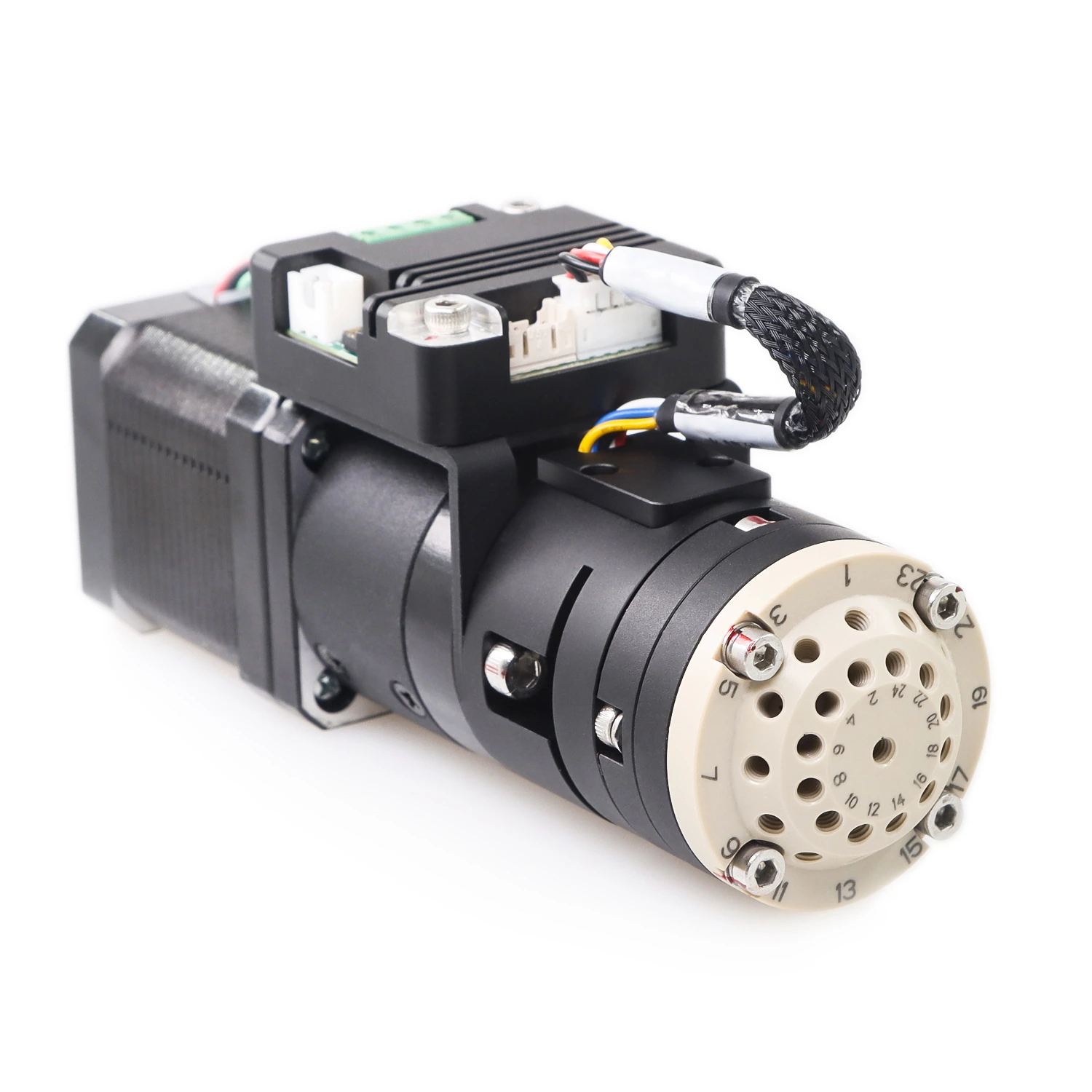
| MRV3 multiport rotary valve | Multiple-source selection | Compare 10-, 16- and 24-port options and port diagrams; verify high-pressure suitability separately |
Validate operation results at the receiver
For each configured detection branch, verify the intended diluted-sample route and actual sample arrival. Check method-required flow, pressure and bubbles, then assess blanks and counting or detection results after switching.
Repeat renewal and blank checks after maintenance and compare the first sample with subsequent operation. Evaluate sheath supply only on branches whose detection architecture requires it.
Locate abnormalities and restore the next operation
A blocked branch, retained previous sample or entering bubble can disturb detection even when the selected port is correct. A normal upstream supply condition may conceal incomplete renewal at the detector.
Hold the affected detection branch and retain the associated sample identity. Confirm its port state, clear or service the path as permitted, then verify sample renewal, channel conditions and blanks before reconnecting the next sample.
Valve port count does not establish independent detection-channel count or simultaneous operation. Each detector and any sheath-flow branch require their own validation.