Foreach TechnologyForeach Technology
Home
Products
Applications
About Us
Contact & Partnership
简体中文EnglishEspañolFrançais한국어Русский
Home
Products
Pump SeriesValve SeriesTubing SeriesFitting SeriesProbe SeriesSmart Control SeriesTubing Assemblies
Applications
All applicationsIVD DiagnosticsLife SciencesLaboratory AutomationAnalytical InstrumentsEnvironmental MonitoringSynthetic Biology
Resources
DatasheetsFluid Resistance CalculatorFitting ReplacementInstallation GuidesMaterial CompatibilityTechnical ArticlesCompany News
About Us
About ForeachR&D and ManufacturingQuality System and QualificationsMilestonesForeach Culture
Contact & Partnership
Contact UsBecome a Distributor
  • Pump Series
  • Valve Series
  • Probe Series
  • Fitting Series
  • Tubing Series
  • Control Series
  • Tubing Assemblies
  • All applications
  • IVD
  • Life Science
  • Lab Automation
  • Analytical Instruments
  • Environmental Monitoring
  • Synthetic Biology
  • Datasheets
  • Fluid Resistance Calculator
  • Fitting Replacement
  • Installation Guides
  • Material Compatibility
  • Technical Articles
  • Company News
  • About Foreach
  • R&D & Manufacturing
  • Quality & Compliance
  • History
  • Foreach Culture
  • Inquiry Form
  • Contact Information

Shenzhen Foreach Technology Co., Ltd.

Address: 13th Floor, 2nd Building, Yufengda Industrial Park, 1008th Guang Qiao Boulevard, Guangming District, Shenzhen 518132 CHINAView Map

Email: [email protected]

Tel: +86 755 8655 3831

LinkedInYouTubeFacebookInstagramX

© 2026 Shenzhen Foreach Technology Co., Ltd. All rights reserved.

Privacy Policy·

Home/Applications/In Vitro Diagnostics/Immunoassay analyzer
< Back

Bubble and pressure sensing in immunoassay analyzers

Application guide

Immunoassay reagent addition and solid-phase washing need different monitoring responses. A supply disturbance may affect one reagent dose, while an interrupted wash can change residual liquid or solid-phase retention. Assign bubble and pressure observations to the relevant reaction vessel and process stage.

Applicable architecture

This page focuses on immunoassays with solid-phase separation washing, using magnetic particles as the bead-washing example. Confirm whether the specific assay requires separation washing and what solid phase it uses. Other architectures require branches defined by the actual instrument workflow. Candidate pumps and valves do not represent complete-instrument analytical performance.[3]

Application guide

Immunoassay analyzer

Immunoassay analyzer
Diaphragm pumps in immunoassay analyzers
Fluid supply and waste removal for magnetic solid-phase washing
Bubble and pressure sensing in immunoassay analyzers
Tubing and fittings in immunoassay analyzers
Fluidic valves in immunoassay analyzers
Isolation of reagent and wash-fluid paths
Piston pumps in immunoassay analyzers
Sample addition with a fixed probe
Sampling and wash probes in immunoassay analyzers
Syringe pumps in immunoassay analyzers
Multiple-reagent aspiration and dispensing

On this page

What do these products do in this instrument?Separate reagent-dose monitoring from wash-cycle monitoringRetain the reaction history when a wash is interruptedTranslate actual branch conditions into configuration requirementsFluidic monitoringCompare product configurations by the roles on this pageRelated operations and architecture comparisonsConfirm product roles in actual operationDoes a normal pressure trace confirm successful magnetic washing?ReferencesRelated guides

01What do these products do in this instrument?

Bubble and pressure sensing: associate dispensing and washing abnormalities

Place monitoring in the reagent, wash-supply or permitted aspiration branch that carries the condition of interest. The controller combines the signal with the reaction vessel and completed steps; magnetic capture, residual liquid and assay background need their own observations.

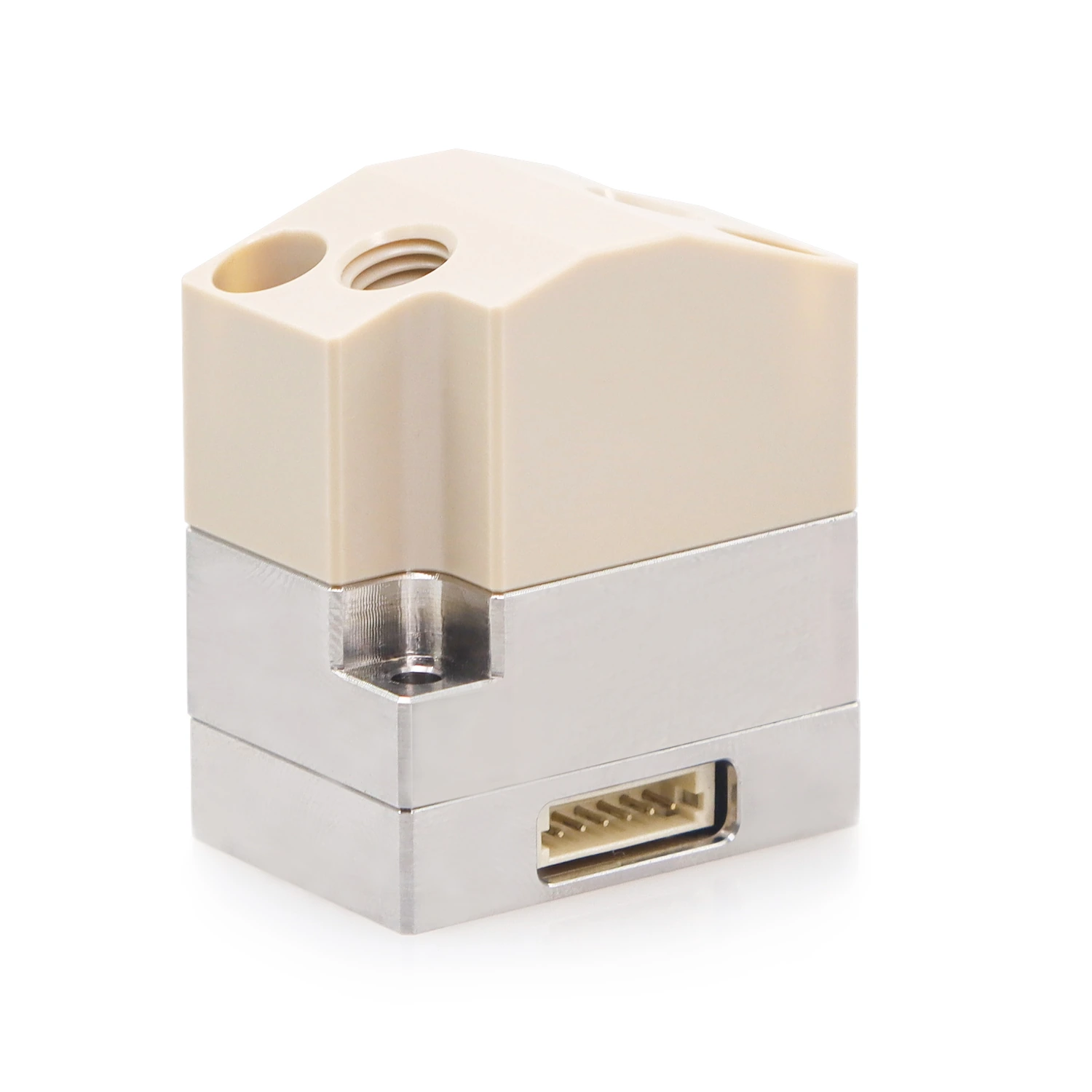
ABD provides bubble or liquid-state signals for defined tubing; PDM5 provides pressure information at a defined location. Configure module, position and action window separately; the controller associates affected samples or tasks.

02Separate reagent-dose monitoring from wash-cycle monitoring

A reagent-line observation should be interpreted against bottle state, mixing where required and the metered addition. A wash-line observation belongs to a particular fill or aspiration phase. Gas entry near the end of aspiration may have a different meaning from air entering a reagent dose, so one alarm rule should not be copied between those branches.

Further technical reading

  • Why Do Air Bubbles Delay or Bias Piston Pump Dispensing?
  • What is flow resistance calculation for? Using the Foreach calculator in fluid-path design and selection

03Retain the reaction history when a wash is interrupted

The response depends on whether reagent addition, magnetic capture, filling or aspiration was active. Record the completed stage and the affected vessel before stopping the station. After restoring supply or drainage, the assay procedure determines whether the interrupted reaction can continue; adding another wash or reagent dose changes the sequence and requires a defined method decision.

04Translate actual branch conditions into configuration requirements

Bubble- and pressure-sensing configuration conditions in immunoassay analyzers
ConditionTo confirm
Reagent branchDefine formulation, storage-to-use state, any suspension handling, bottle-change sequence and the actual addition being monitored.
Wash branchLocate the sensing point relative to the wash head, aspiration path and waste receiver, with phase-specific expectations for liquid and gas.
Vessel and stage recordAssociate the event with completed reagent additions, capture and wash steps; retain the state of every reaction using a shared wash resource.
Operations supported in this instrument
OperationSpecific operating conditions
Fluidic monitoringReagent, wash-supply or aspiration branch; intended liquid/gas state in each phase; active reaction vessel; completed capture, fill and aspiration steps

05Fluidic monitoring

For a reagent-source event, review the specific addition and whether mixing or replenishment was underway. Confirm the next actual dose after restoring the source instead of treating a cleared alarm as evidence of correct reagent composition.

For a wash interruption, preserve the capture, fill and aspiration history. Check the wash head and waste receiver together before deciding which reactions need method-defined handling.

Challenge monitoring during normal station transitions as well as faults. Measure unnecessary stops separately from missed supply or aspiration disturbances, including the effect on other vessels sharing the station.

Use station observations to locate the problem: supply, aspiration geometry, capture or waste accumulation. The monitoring module contributes a signal to that investigation, not a direct measurement of bead loss or washing effectiveness.

06Compare product configurations by the roles on this page

Configuration options for the product roles on this page
ProductConfiguration optionConditions to verify
ABD bubble-detection moduleBubble or liquid-state identification in defined tubingValidate detection and false alarms for tubing material, dimensions, medium and action window
PDM5 pressure-detection modulePressure-state monitoring at a defined fluidic locationConfirm range and wetted configuration by model; validate normal baseline and abnormalities separately
  • ABD bubble-detection module

    ABD bubble-detection module

    View Details
  • PDM5 pressure-detection module

    PDM5 pressure-detection module

    View Details

07Related operations and architecture comparisons

Sample addition with a fixed probe

Sample-volume error affects reaction ratios, while external probe droplets may contaminate the next container. Combine aspiration, delivery and probe washing into a complete sequence and compare recovery after concentrated samples.

  • Sample addition with a fixed probe

Multiple-reagent aspiration and dispensing

Bead suspensions, binding reagents and substrates may have different settling, light and storage requirements. Plan standby, mixing and first-dose recovery by actual formulation, including residual liquid in shared tubing.

  • Multiple-reagent aspiration and dispensing

Fluid supply and waste removal for magnetic solid-phase washing

Record added volume, residual liquid and bead loss in every wash. If background is abnormal, distinguish inadequate capture, coverage, aspiration positioning and waste pooling before changing pump output.

  • Fluid supply and waste removal for magnetic solid-phase washing

08Confirm product roles in actual operation

Operating-point validation and fault localization
OperationMeasurements and observationsPriority checks
Fluidic monitoringExercise representative source depletion and wash-supply or aspiration disturbances in their actual phases. Compare signal timing and controller response with received reagent, residual wash liquid and retained solid phase.A supply alarm cannot distinguish inadequate magnetic capture from misplaced aspiration. If background remains abnormal after path recovery, assess those station conditions and the assay separately.

Validate dose monitoring against actual reagent receipt and wash monitoring against the completed wash cycle. Recovery must account for the affected reaction history as well as the next vessel using the station.

09Does a normal pressure trace confirm successful magnetic washing?

It confirms only the pressure observed at that location and time. Wash acceptance also requires the intended solid-phase retention, residual-liquid removal and assay background; a recovered pressure trace cannot reconstruct an interrupted wash.

Pump flow alone does not prove adequate washing; validate magnetic capture, mixing and aspiration position across the whole station.

References

View references (3)
  1. [1]FOREACH ABD bubble-detection module: configurations and specifications
  2. [2]FOREACH PDM5 pressure-detection module: configurations and specifications
  3. [3]Beckman Coulter Access: an assay example of magnetic solid-phase separation, washing and substrate detection

Related guides

  • Back to the immunoassay analyzer fluidics overview

Related Products

ABD Air-bubble detectors

ABD Air-bubble detectors

PDM5 Pressure sensors

PDM5 Pressure sensors

Related Technical Articles

Why Do Air Bubbles Delay or Bias Piston Pump Dispensing?

A completed piston stroke does not prove that the intended liquid volume reached the vessel. Bubble compression temporarily stores displacement; expansion can then cause a trailing dispense or affect the next cycle. Locate where bubbles first appear and compare synchronized pressure and individual dispense masses before and after priming.

2026-09-10View Details

What is flow resistance calculation for? Using the Foreach calculator in fluid-path design and selection

The free flow rate of the pump meets the requirements. After installing the pipelines, valves and joints, the liquid supply at the end is insufficient. Flow resistance calculations can break the problem down into comparable data: what pressure differential is required at the target flow rate, where does the pressure loss mainly occur, and what happens if the pipe diameter, pipe length, component Cv or medium viscosity is changed. This article combines the actual function of the Foreach flow resistance calculator with a recalculable fluid circuit case to explain how to use the calculation results for design, selection, troubleshooting and prototype verification.

2026-09-11View Details

Discuss Your IVD Fluidic Requirements

Share the instrument type, sample and reagent properties, working volumes, cycle timing, fluid path and acceptance criteria so we can discuss suitable components and prototype evaluation.

Discuss your application