Foreach TechnologyForeach Technology
Home
Products
Applications
About Us
Contact & Partnership
简体中文EnglishEspañolFrançais한국어Русский
Home
Products
Pump SeriesValve SeriesTubing SeriesFitting SeriesProbe SeriesSmart Control SeriesTubing Assemblies
Applications
All applicationsIVD DiagnosticsLife SciencesLaboratory AutomationAnalytical InstrumentsEnvironmental MonitoringSynthetic Biology
Resources
DatasheetsFluid Resistance CalculatorFitting ReplacementInstallation GuidesMaterial CompatibilityTechnical ArticlesCompany News
About Us
About ForeachR&D and ManufacturingQuality System and QualificationsMilestonesForeach Culture
Contact & Partnership
Contact UsBecome a Distributor
  • Pump Series
  • Valve Series
  • Probe Series
  • Fitting Series
  • Tubing Series
  • Control Series
  • Tubing Assemblies
  • All applications
  • IVD
  • Life Science
  • Lab Automation
  • Analytical Instruments
  • Environmental Monitoring
  • Synthetic Biology
  • Datasheets
  • Fluid Resistance Calculator
  • Fitting Replacement
  • Installation Guides
  • Material Compatibility
  • Technical Articles
  • Company News
  • About Foreach
  • R&D & Manufacturing
  • Quality & Compliance
  • History
  • Foreach Culture
  • Inquiry Form
  • Contact Information

Shenzhen Foreach Technology Co., Ltd.

Address: 13th Floor, 2nd Building, Yufengda Industrial Park, 1008th Guang Qiao Boulevard, Guangming District, Shenzhen 518132 CHINAView Map

Email: [email protected]

Tel: +86 755 8655 3831

LinkedInYouTubeFacebookInstagramX

© 2026 Shenzhen Foreach Technology Co., Ltd. All rights reserved.

Privacy Policy·

Home/Applications/In Vitro Diagnostics/Immunoassay analyzer
< Back

Fluidic valves in immunoassay analyzers

Application guide

Immunoassay source selection and wash-branch shutoff are different valve duties. Organize reagent routing around formulation compatibility, and coordinate supply and aspiration branches with capture and wash timing so a valve change cannot silently alter the reaction sequence.

Applicable architecture

This page focuses on immunoassays with solid-phase separation washing, using magnetic particles as the bead-washing example. Confirm whether the specific assay requires separation washing and what solid phase it uses. Other architectures require branches defined by the actual instrument workflow. Candidate pumps and valves do not represent complete-instrument analytical performance.[3]

Application guide

Immunoassay analyzer

Immunoassay analyzer
Diaphragm pumps in immunoassay analyzers
Fluid supply and waste removal for magnetic solid-phase washing
Bubble and pressure sensing in immunoassay analyzers
Tubing and fittings in immunoassay analyzers
Fluidic valves in immunoassay analyzers
Isolation of reagent and wash-fluid paths
Piston pumps in immunoassay analyzers
Sample addition with a fixed probe
Sampling and wash probes in immunoassay analyzers
Syringe pumps in immunoassay analyzers
Multiple-reagent aspiration and dispensing

On this page

What do these products do in this instrument?Assign selection and shutoff to separate functionsMake the sharing decision with the assay backgroundTranslate actual branch conditions into configuration requirementsCompare product configurations by the roles on this pageExplore specific operating and validation tasksConfirm product roles in actual operationCan adding a shutoff valve make a shared substrate line acceptable?ReferencesRelated guides

01What do these products do in this instrument?

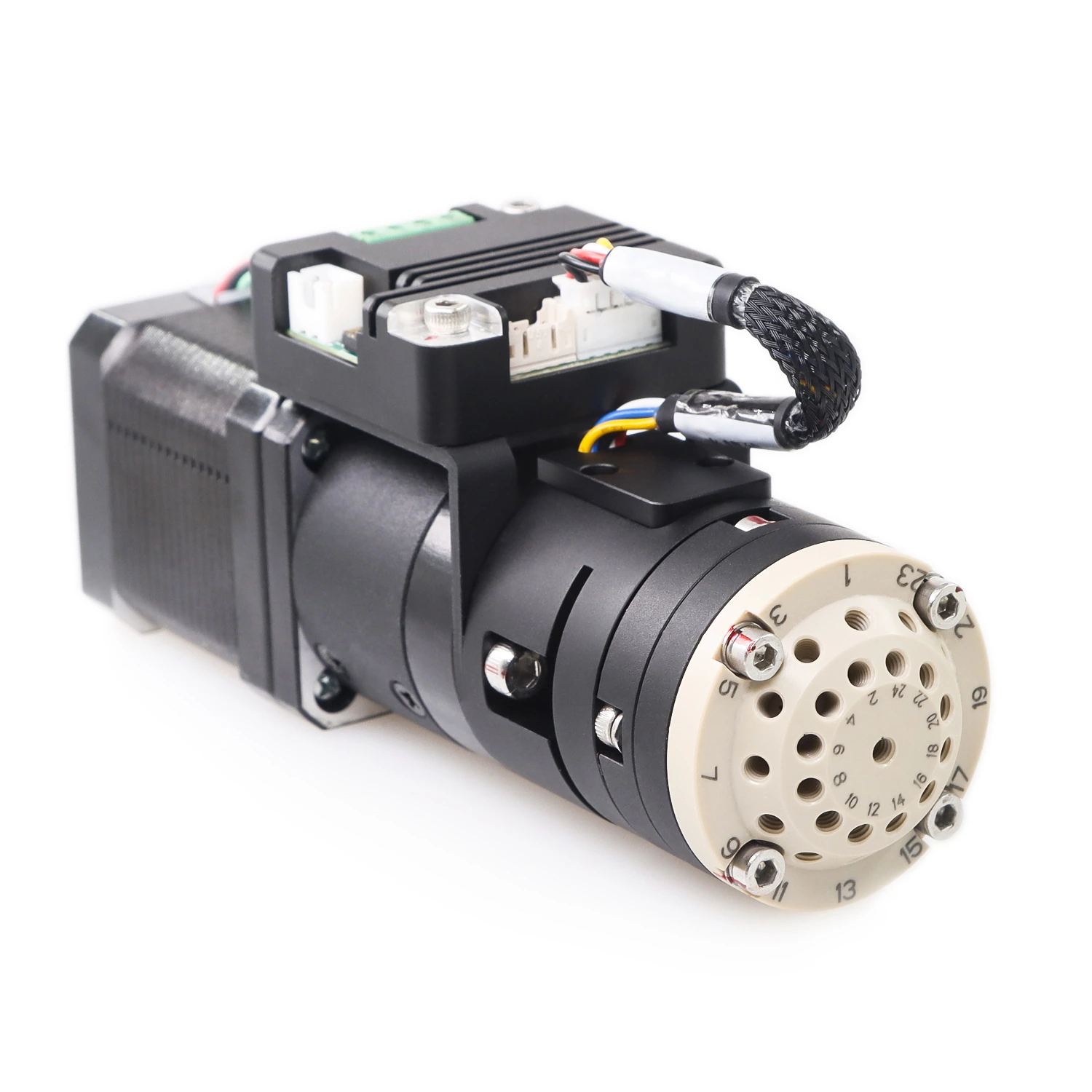
Multiport rotary valves: multiple-source selection for reagents and wash fluid

A rotary selector connects the reagent or wash source required by a metering task. Decide whether substrates, binding reagents or suspensions may share the downstream segment from the actual assay and handling procedure, rather than from the number of available ports.

MRV3 selects sources or destinations and requires a port-state diagram and shared-volume budget. Port count indicates routing options; confirm pressure in each state and independent simultaneous supply requirements separately.

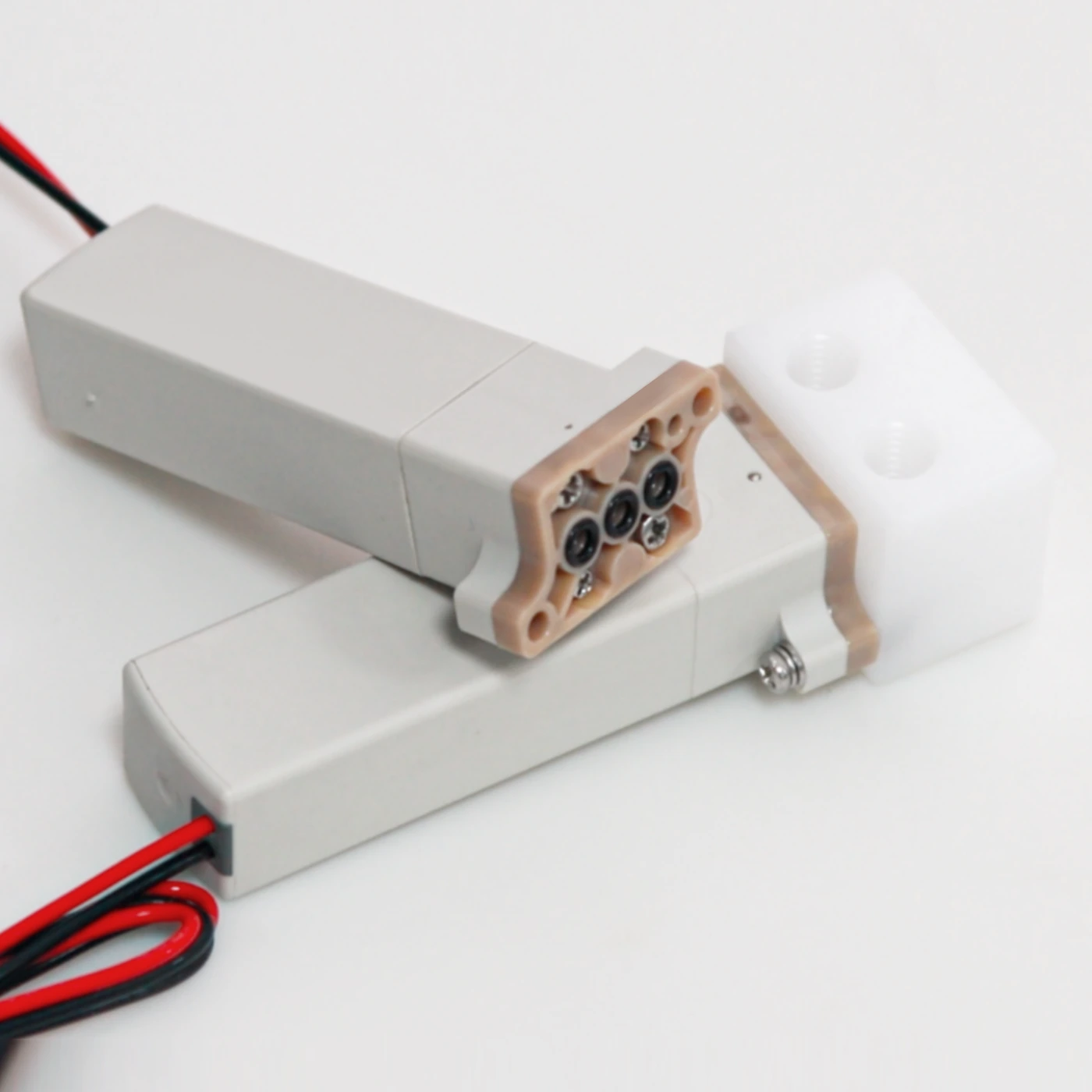
Solenoid valves: supply and drain branch on/off control

An on/off valve controls an appropriate wash-supply or aspiration branch in coordination with pumps and the wash head. Define the open and closed states around capture, filling and removal; valve closure alone does not establish magnetic retention or acceptable wash residue.

Solenoid valves control branches according to actual ports, flow direction, differential pressure and power-off state. Check opening/closing order with pump commands; inspect shutoff leakage and shared residue separately.

02Assign selection and shutoff to separate functions

Use the source map to identify where a rotary connection is needed, and the wash sequence to identify where a branch must open or close. For an on/off configuration, check flow direction, differential pressure and the required power-off state. These decisions solve different parts of the fluid path and should not be reduced to choosing one valve type for every operation.

Further technical reading

  • Rotary Valve Selection Guide: From Fluid Paths to System Validation
  • Choosing Rotary Valve Wetted Materials: Head, Rotor and Seals
  • What Is a Solenoid Valve? Operating Principles and 2-Way/3-Way Fluid Control

03Make the sharing decision with the assay background

A shared reagent line retains liquid between source changes; some formulation sequences may require a dedicated route. Evaluate the proposed renewal procedure with the actual assay blank or background and first received dose. For washing, validate opening and closing in the complete capture, fill and aspiration sequence, including the effect of an interrupted cycle on the reaction vessel.

04Translate actual branch conditions into configuration requirements

Fluidic-valve configuration conditions in immunoassay analyzers
ConditionTo confirm
Reagent selectionList source formulations, permitted sharing, receiving vessel and metering state, including suspension or substrate handling where applicable.
Wash-branch controlSpecify supply and aspiration destinations, actual pressure differences, flow direction and the valve state required during each wash phase.
Fault and service statesDefine isolation after power loss or interruption, then retain the completed reaction stages before permitting another dose or wash.
Operations supported in this instrument
OperationSpecific operating conditions
Isolation of reagent and wash-fluid pathsSeparate reagent-selection and wash-branch state diagrams, formulation sharing, capture/fill/aspiration timing, power-off states and affected reaction-vessel records

05Compare product configurations by the roles on this page

Configuration options for the product roles on this page
ProductConfiguration optionConditions to verify
MRV3 multiport rotary valveMultiple-source selectionCompare 10-, 16- and 24-port options and port diagrams; verify high-pressure suitability separately
SV10 solenoid valveOn/off control or branch selectionCheck normal state, differential pressure, flow direction and duty cycle; high-pressure tasks require a separately suitable configuration
  • MRV3 multiport rotary valve

    MRV3 multiport rotary valve

    View Details
  • SV10 solenoid valve

    SV10 solenoid valve

    View Details

06Explore specific operating and validation tasks

Isolation of reagent and wash-fluid paths

Whether a substrate channel can be shared with other reagents depends on assay compatibility and background results. Switching-valve channels provide routing options, not proof of contamination isolation.

  • Isolation of reagent and wash-fluid paths

07Confirm product roles in actual operation

Operating-point validation and fault localization
OperationMeasurements and observationsPriority checks
Isolation of reagent and wash-fluid pathsCheck reagent arrival and assay background after the proposed source changes; separately test wash-branch opening, shutoff leakage and complete vessel washing with the chosen valve timing.Wrong-source connection, a leaking closed branch or delayed wash removal can have different effects. Identify the relevant state and reaction stage before adjusting a common timing parameter.

Accept source selection against reagent identity and assay-compatible changeover, and on/off control against the complete wash sequence. Document which valve function each candidate configuration is intended to perform.

08Can adding a shutoff valve make a shared substrate line acceptable?

A shutoff can control a connection state but does not remove liquid already retained downstream. Determine sharing from formulation compatibility, the renewal sequence and assay background; a separate substrate path may still be needed.

Pump flow alone does not prove adequate washing; validate magnetic capture, mixing and aspiration position across the whole station.

References

View references (3)
  1. [1]FOREACH MRV3 multiport rotary valve: configurations and specifications
  2. [2]FOREACH SV10 solenoid valve: configurations and specifications
  3. [3]Beckman Coulter Access: an assay example of magnetic solid-phase separation, washing and substrate detection

Related guides

  • Back to the immunoassay analyzer fluidics overview
  • Isolation of reagent and wash-fluid paths

Related Products

MRV3 Rotary valves

MRV3 Rotary valves

SV10 Solenoid valves

SV10 Solenoid valves

Related Technical Articles

Rotary Valve Selection Guide: From Fluid Paths to System Validation

Map the connections required at each step before comparing specifications. Use the actual liquids, tubing and switching sequence to validate suitability for your instrument.

2026-09-30View Details

Choosing Rotary Valve Wetted Materials: Head, Rotor and Seals

Identify every component in contact with liquid before comparing PEEK, PCTFE and other candidates. Evaluate chemical compatibility, dynamic sealing and analytical results together.

2026-09-30View Details

What Is a Solenoid Valve? Operating Principles and 2-Way/3-Way Fluid Control

Follow the fluid path after energization to understand how 2-way and 3-way solenoid valves handle reagent dispensing and washing, and how they work with pumps and control programs.

2026-09-29View Details

Discuss Your IVD Fluidic Requirements

Share the instrument type, sample and reagent properties, working volumes, cycle timing, fluid path and acceptance criteria so we can discuss suitable components and prototype evaluation.

Discuss your application